
The most common type of eczema
The main symptoms of atopic eczema are itchy red patches and dry skin. Another distinctive sign is alternating periods of flare-ups and remission.
In most cases, this type of eczema appears in childhood and usually disappears in adulthood.
Atopic eczema is not contagious — you cannot "catch" it! Simply put, the skin becomes inflamed easily. That is why it is also called atopic dermatitis.
Atopic eczema is the skin manifestation of atopy, just as asthma is its respiratory manifestation.
Recognizing atopic eczema
A chronic condition
People often talk about “eczema flares” because this disease is chronic. Flares are followed by remissions during which the disease may almost disappear — until the next flare.
Atopic eczema is hereditary and differs from contact eczema, which is acquired and can improve by avoiding the trigger.
Symptoms of atopic dermatitis
Permanently:
- A tendency to dry or very dry skin
During flares:
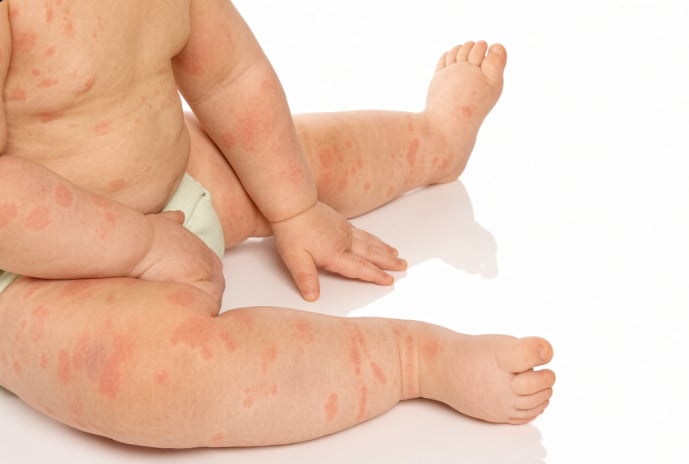
- Red patches
- Itching
- Oozing
- Skin thickening (lichenification)
- Scratch marks (excoriations)
Flare symptoms are always accompanied by intense itching that disrupts sleep and increases irritability.
During remissions, the skin remains dry and tight, sometimes itchy.
Severity varies widely, but inflammation always follows the same order: erythema (redness) with possible swelling → vesicles → oozing → crusts.
Areas of the body affected
In babies (under 2)
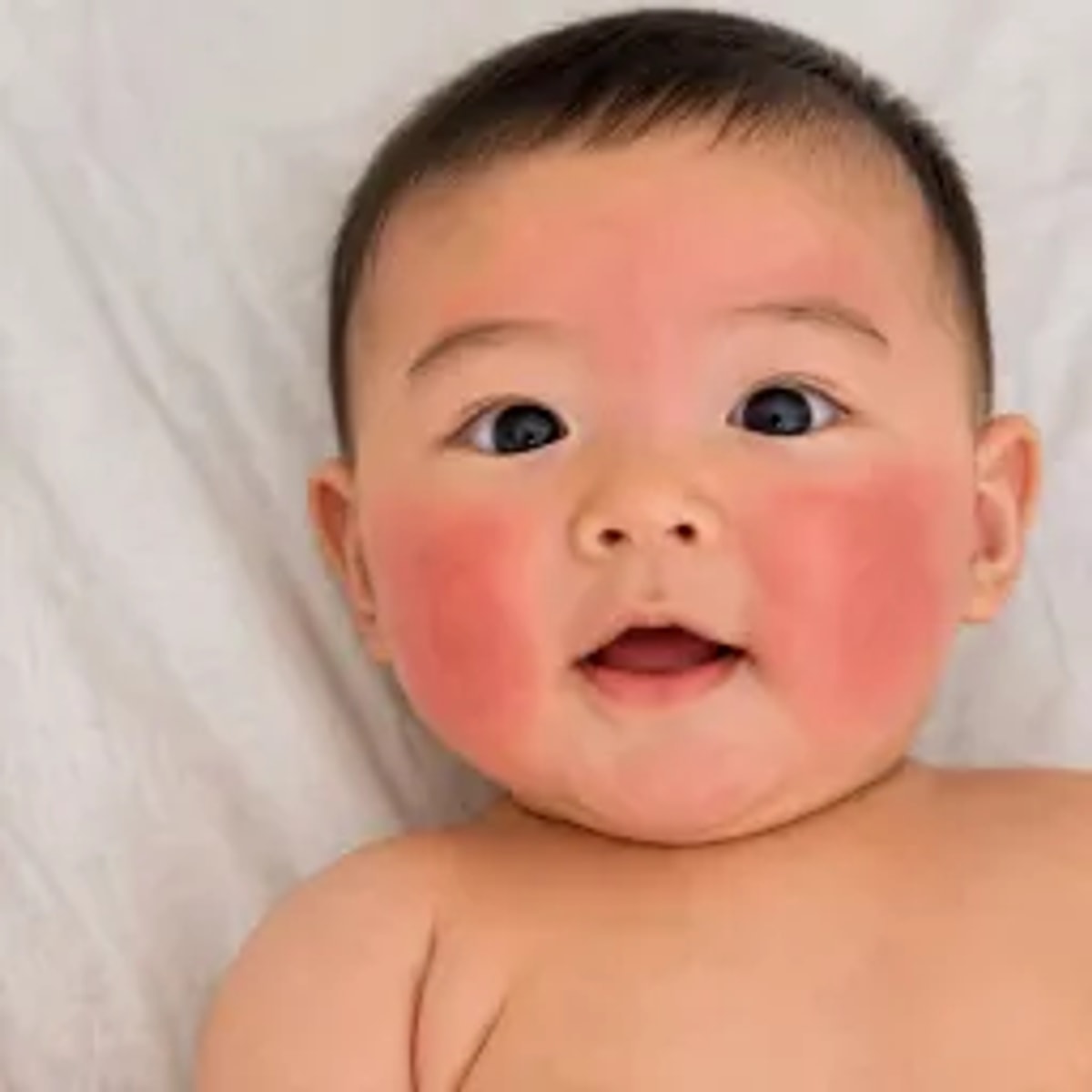
In babies, atopic eczema affects fleshy areas (cheeks, forehead), the arms and the stomach.
In children and teenagers
Atopic eczema appears in the folds of the elbows and knees, as well as on the hands and face (around the mouth, eyelids, behind the ears).
In most cases, atopic eczema tends to disappear by adolescence.
In adults
If atopic dermatitis persists into adulthood, patches can appear almost anywhere, especially on the face, neck and hands.

Atopic eczema cannot be “cured once and for all”, but effective treatments can soothe itching, heal flares and space them out when followed correctly.
It is also important to moisturize even during quiet periods, to delay the next flare.
Daily skin moisturizing is essential. It helps space out flares

How does the condition evolve over time?
In most cases, flares become less frequent and less intense over time and often disappear completely before adulthood.
The causes of atopic eczema
Science has advanced a lot and we now understand this condition better. It is important to distinguish the cause from triggering factors.
- Genetic factors affecting skin structure and defense reactions — the “atopic background”
- Environmental factors that trigger flares on this background
 Genetic predisposition
 Atopic background
 Environmental sensitivity
A dysfunctional skin barrier
Skin normally acts as a barrier. Atopic skin is weakened and no longer works properly — it protects less and reacts too strongly.
Atopic skin becomes more permeable to irritants and allergens.
When allergens or irritants enter, the skin inflames very easily.
Genetic predisposition
The atopic background — a predisposition to overreact to the environment — is genetic.
“If one parent is affected, the child is at higher risk; if both are, the risk is even higher.”
50% RISK WHEN ONE PARENT IS AFFECTED

Triggering and aggravating factors
- climate
- pollution
- temperature changes
- certain clothes
- sweat
- certain foods
- stress
- allergens
- microbes
- scratching
Who is most affected by atopic eczema?
Children are the most affected. The disease usually starts very early — before three months on average.
1 IN 5 CHILDREN UNDER 7
How to treat atopic dermatitis?